
"coffee tree roots"
1000 article(s) found

Common sense of Coffee the basic environmental conditions of planting coffee trees
Coffee belt: coffee can not be grown in any environment, because it is originally a plant growing in a tropical rain forest, and in phylogeny, it forms the habit of requiring calm wind, cool, shaded or semi-shaded and humid environment. We call the strips on both sides of the equator between latitudes 25 degrees south and north suitable for the growth of coffee trees as coffee belts. Temperature: the requirement for temperature varies with the species of cultivation, small

Sharing the production process of coffee beans
It takes as long as 3-5 years for a coffee tree drama to steal and grow to a beautiful end. 6-10 years of coffee trees are the most likely to bear fruit, about 15-20 years, is a bumper harvest. Coffee trees are usually bred in nurseries and grow into saplings, and then moved to coffee farms a year later, completely following the way the Arabs planted and cultivated coffee trees at the time. In the first four or five years of the development of coffee trees, it will continue to go down.

Can the coffee beans you buy grow coffee trees? How is coffee grown?
The coffee beans bought cannot be planted, just like white rice cannot grow grain rice. Coffee cultivation needs living seeds to take root and sprout, but the coffee fruit planted is generally not suitable for drinking. After harvest, coffee fruit needs to be treated by sun and washing, and only after baking can it be suitable for drinking. The flavor is good

Global coffee producing area St. Helena Coffee Market
Coffee was first grown on the island of St. Helena (St.Helena) in 1732. Although some other introduced plants have failed since the 1860s, coffee trees have taken root and flourished here. The island also experienced a coffee improvement campaign to produce the best quality coffee. Coffee producing area of St. Helena: coffee trees on St. Helena have been planted.

The coffee producing area of St. Helena.
Coffee was first grown on the island of St. Helena (St.Helena) in 1732. Although some other introduced plants have failed since the 1860s, coffee trees have taken root and flourished here. The island also experienced a coffee improvement campaign to produce the best quality coffee. Coffee producing area of St. Helena: coffee trees on St. Helena have been planted.

A brief introduction to the flavor, taste and aroma characteristics of Katim's boutique coffee beans.
Catimor: in 1959, the Portuguese mixed Brazilian Kaddura and Timo to develop a disease-resistant Katim / Katimo, which is now an important variety of commercial beans. Yunnan small grain coffee is a 3-year-old 4-year-old fruiting tree. Coffee is a short-day plant. Coffee has the characteristics of multiple flowering and concentrated florescence. Small seed coffee florescence in Yunnan from February to July

The planting environment of coffee trees the conditions for planting coffee trees
Coffee has entered thousands of households, and it is no longer what people called a foreign thing many years ago. So many friends in the planting industry also want to plant coffee trees to catch up with the ocean current. Next, I will introduce to you a little knowledge about the growing environment of coffee. 1. Coffee belt: coffee can not be grown in any environment, because it was originally grown in a tropical rain forest.

What are the varieties of small-grain coffee beans? Yunnan small-grain coffee brand flavor taste Huaguoshan introduction
This species is the most widely cultivated species in the genus Coffea. Because of its strong cold resistance and short-term low temperature resistance, it can grow on a mountain at an altitude of 2100 meters in the tropics, but is not resistant to drought; the branches are fragile and not resistant to strong wind; the disease resistance is relatively weak; the fruit is easy to fall off after ripening; after processing, the coffee has a low flavor and caffeine content. 1, sexual reproduction is a performance to obtain a large number of seedlings.

Introduction to the species and Flavor of Mexican Coffee producing countries
Mexican coffee-growing areas are mainly concentrated in the southeastern highlands, near Guatemala. Most of the mountains in the south are volcanic areas, and the volcanic ash soil is not only conducive to the drainage of coffee roots, but also provides sufficient nutrients for the growth of coffee trees. Most of the coffee varieties planted are Kaddura, Tibica, bourbon, etc., and the treatment methods are mostly water washing treatment, which are classified according to altitude. Coffee beans
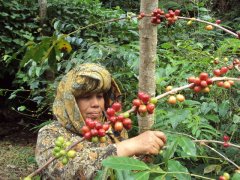
The common sense of coffee tree planting can coffee trees be planted at home? what are the disasters of coffee trees?
Professional coffee knowledge exchange more coffee bean information please follow the coffee workshop (Wechat official account cafe_style) A coffee tree bears fruit several times a year. Coffee trees grow in the tropics between Tropic of Cancer and Tropic of Cancer and near the equator. There are also great differences in appearance among the so-called world coffee growth zones, caffeine varieties and regional factors. Evergreen

Introduction to Mexican Coffee producing area Fine Mexican Coffee beans Aldumara Coffee
Mexican coffee-growing areas are mainly concentrated in the southeastern highlands, near Guatemala. Most of the mountains in the south are volcanic areas, and the volcanic ash soil is not only conducive to the drainage of coffee roots, but also provides sufficient nutrients for the growth of coffee trees. Most of the coffee varieties planted are Kaddura, Tibica, bourbon, etc., and the treatment methods are mostly water washing treatment, which are classified according to altitude. Coffee beans

A brief introduction to the flavor, taste and aroma characteristics of Katim boutique coffee beans suitable for deep baking
Coffee is a semi-shaded tree species, it is recommended to establish a moderate shade degree of 3040%. In the site environment of growing coffee in our province, it is generally difficult to solve the problem of water conservancy and irrigation. the water season is in the dry season, and it is also the season to compete with other crops for water. It is not easy to rely on irrigation to meet the water demand in the coffee field. It is necessary to loosen the soil in time after the end of the rainy season and adopt dead objects on the ground.

Description of the overall bitter taste of iron pickup coffee introduction to the characteristics of the manor producing area
Tracing back to its roots, typica originated from Ethiopia, the ancient origin of coffee, and is the earliest original species of coffee. Bourbon is a variety of typica, both of which have rich aroma and excellent taste performance, and belong to very high quality varieties in Arabica. It is said that the coffee tree species that was first introduced into Zhukula in Yunnan is typica. Baoshan area was opened in the 1950s.

Introduction to the taste and flavor of Mexican coffee beans with various treatments
Mexican coffee-growing areas are mainly concentrated in the southeastern highlands, near Guatemala. Most of the mountains in the south are volcanic areas, and the volcanic ash soil is not only conducive to the drainage of coffee roots, but also provides sufficient nutrients for the growth of coffee trees. Most of the coffee varieties planted are Kaddura, Tibica, bourbon, etc., and the treatment methods are mostly water washing treatment, which are classified according to altitude. Coffee beans
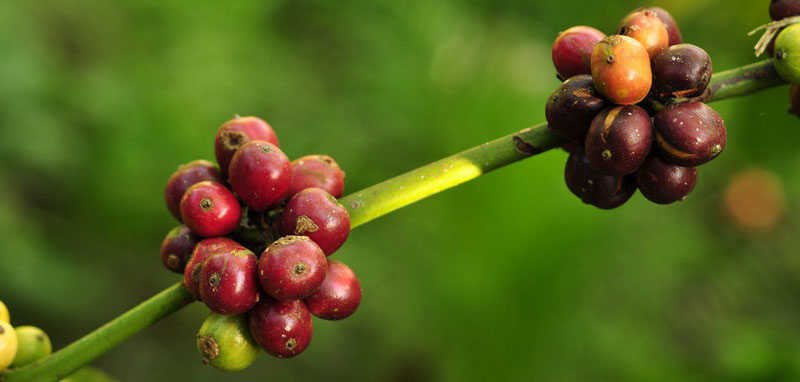
Introduction to Coffee-exploring the color and aroma of coffee beans from the root
[cultivation of coffee trees] Coffee trees are evergreen shrubs of the Akanaceae family and belong to the Rubiaceae family in plant taxonomy. Since ancient times, most of the plants of the family Rubiaceae have special effects, such as quinine, which is regarded as a specific drug for malaria. and Dugan for the treatment of amoeba dysentery. Native to Abyssinia in East Africa, it is now mainly concentrated in the tropical zone or subtropics of America, Africa, and Asia.

Introduction to the characteristics of Yunnan Tieka Coffee Flavor Manor
The so-called new variety actually refers to catimor, which is a hybrid of timor and Arabica from the Roberta family. Compared with the old variety, it lacks rich aroma and taste, and has a relatively shallow smell of grass and soil, but it has the advantages of resistance to diseases and insect pests, easy management and high yield, and its yield per mu is up to 350kg, which is twice that of the old variety.

Where can coffee trees be planted in China?-can coffee trees be planted in Gansu?
Where can coffee trees be planted in China-can coffee trees be planted in Gansu? soil conditions are also important. Coffee trees belong to shallow root plants. The soil is rich in organic matter (with strong fertility), rich in water vapor (and smooth drainage), deep in soil layer (usually above lm) and weakly acidic (the pH value of the soil for coffee cultivation in Yunnan, China is generally between 5.5 and 6.5).

Katim Coffee Bean Flavor description method introduction to the characteristics of varieties and the degree of taste grinding
The method of describing the flavor of Katim coffee beans introduces that the field management measures are suitable for the management of general small-grain coffee. Propagation method: adopt seed propagation, select 5-year-old fine mother tree, harvest fully mature, fruit shape is normal, full, size is basically the same, with two-seed fruit as seed, using sand bed to promote germination, plastic bag seedling. Selection of suitable forest land the annual average temperature is 19: 21 ℃

Life Journey of Coffee Tree
Coffee, as a perennial evergreen shrub or small tree of Rubiaceae, is a horticultural perennial cash crop. The life of a coffee tree is generally divided into these stages: (1) the seedling stage is the period from the germination of seeds (or cuttings or grafting) to the emergence of seedlings (the stage of raising seedlings in the nursery), about 0.5-1.5 years. After the coffee seed is sown, after a period of time

It takes 6 to 9 months from fruit to maturity of coffee tree, and the harvest season must be dry season.
(1) the seedling stage is the period from the germination of seeds (or cuttings or grafting) to the emergence of seedlings (the stage of raising seedlings in the nursery), about 0.5-1.5 years. After the coffee seeds were sown, the cotyledons began to be unearthed after a period of germination, which took about 30-100 days, and the length of time was closely related to temperature and humidity. Cotyledons must be removed after germination